
Choose the Right Drill Bit or Driver Bit
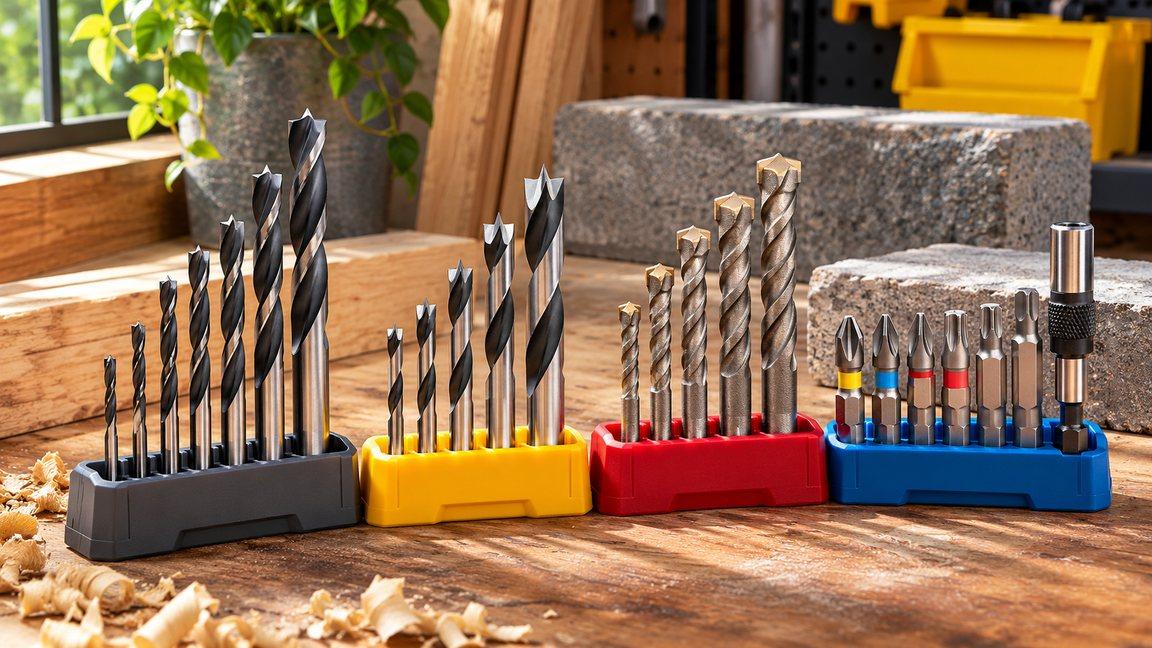
Match the cutting tip or driver profile, shank, and size to the work in front of you.
Pick a cutting bit by material
Brad-point bits help center holes in wood. High-speed steel twist bits are available for mild steel and other rated materials. Masonry bits use a different cutting tip, and tile bits should list the tile type they support. Follow the bit manufacturer’s directions for speed, cooling, and impact use.
Check the shank and diameter
A conventional drill chuck can hold round shanks within its capacity. A quick-change driver collet needs the specified hex shank. An SDS-Plus bit uses a dedicated chuck, and a hole saw needs the correct arbor and pilot bit. Confirm the hole diameter and working depth before ordering.
Fit the screw head
Phillips, slotted, hex, and star-shaped heads need corresponding driver profiles. A bit that rocks or sits shallowly can damage the fastener. For an impact driver, check both the shank fit and whether the bit is rated for impact use.
Keep a useful assortment
Buy a small set for the sizes you regularly use, then add specialized bits for the next project. Store bits by type and replace rounded or chipped tips. Read the product listing for the exact size range and everything included.
Explore related categories
Make Your Business Online By The Best No—Code & No—Plugin Solution In The Market.
30 Day Money-Back Guarantee
Say goodbye to your low online sales rate!